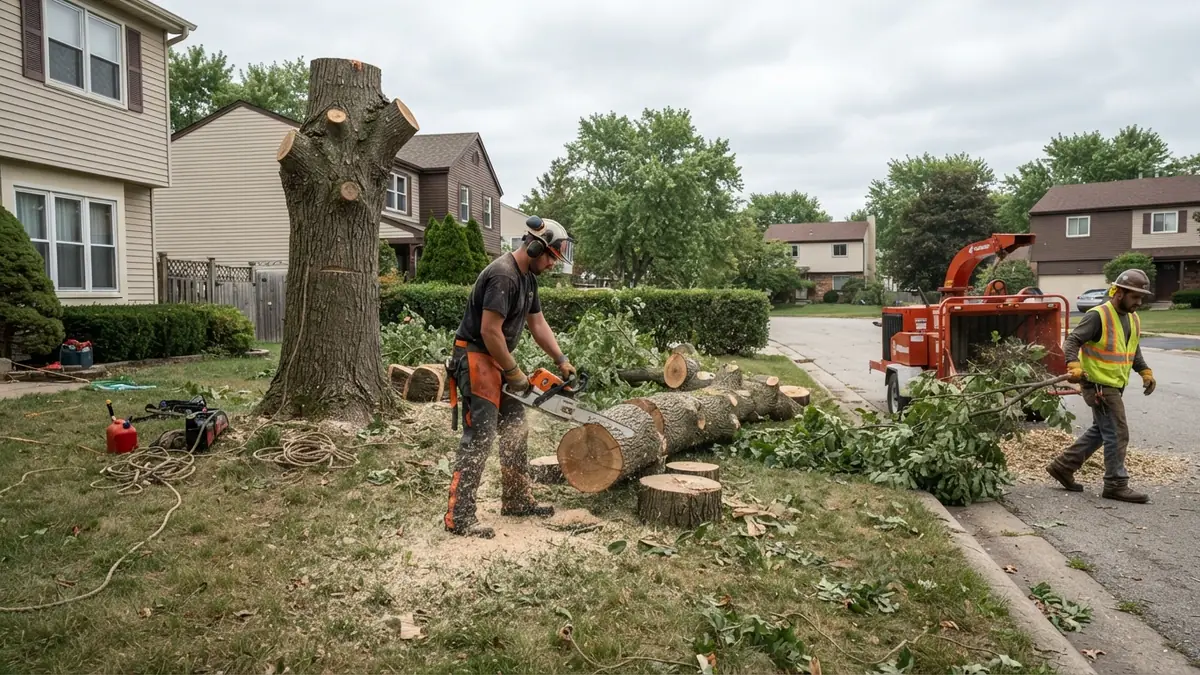
Tree removal pricing is all over the place. One company quotes $400, another quotes $1,400 for the same tree. That gap isn't random — it comes down to a handful of factors that are worth understanding before you call anyone.
Use the tree removal cost calculator on this site to get a ballpark before you start talking to contractors. It won't replace a real quote, but it'll tell you whether the quote you received is in the right universe.
What Tree Removal Actually Costs in 2026
| Tree Size | Height Range | Typical Cost |
|---|---|---|
| Small | Up to 30 ft | $200–$600 |
| Medium | 30–60 ft | $500–$1,200 |
| Large | 60–80 ft | $900–$1,800 |
| Extra Large | 80+ ft | $1,500–$3,500+ |
These are rough national averages. Prices in dense urban markets run 20–30% higher. Rural areas tend to run lower, though access issues can push them back up.
The Factors That Move the Price
Height is the most obvious factor. But it's not the only one.
🔼 Adds to Cost
- Located near the house or structures
- Leaning toward a fence or power line
- Dead or diseased (unpredictable falls)
- No vehicle access to the yard
- Emergency / storm damage removal
- Crane required for tight spaces
🔽 Reduces Cost
- Open yard with easy access
- Multiple trees removed same day
- Healthy tree (predictable cuts)
- Off-peak season (late fall, winter)
- You keep the wood / chips
Stump Grinding — Worth It?
Almost always yes. An unground stump rots slowly over 5–10 years. During that time it's a tripping hazard, an eyesore, and can harbor termites and fungal disease that spread to nearby plants. Stump grinding adds $150–$400 per stump and is worth every dollar for most homeowners.
Full stump excavation (pulling the root ball) costs $300–$800 and is only necessary if you're pouring concrete or doing major landscaping in that exact spot.
Add-On Costs to Know About
| Add-On | Typical Extra Cost |
|---|---|
| Stump grinding | $150–$400 per stump |
| Debris hauling | $50–$150 |
| Emergency/storm removal | 1.5–3× standard rate |
| Crane rental | $500–$1,200/day |
| Permits (some municipalities) | $50–$250 |
How to Avoid Getting Overcharged
- Get at least 3 written quotes. Not estimates over the phone — actual written quotes after they've seen the tree.
- Verify insurance. Ask for a certificate of liability insurance and workers' comp before anyone picks up a saw. If a worker gets injured on your property without coverage, you could be liable.
- Look for ISA certification. The International Society of Arboriculture certifies tree care professionals. It's not required, but it signals training and accountability.
- Be cautious of door-to-door solicitation after storms. "Storm chasers" inflate prices by 2–4× and disappear if something goes wrong.
- Ask what's included. Does the quote include debris removal? Stump grinding? Hauling away the wood? These are easy to leave out of an initial quote.
When You Can't Wait
Dead trees over structures, trees with trunk rot or crown dieback near occupied areas, and storm-damaged trees need urgent attention. Waiting costs more in the long run — both in risk and in the added difficulty of removing a tree that's already falling apart.
Run your situation through the tree removal cost calculator first, then use that number as a reference point when comparing quotes. It won't match exactly — too many site-specific variables — but it tells you if you're in the right range.
Also check the tree trimming cost guide — sometimes trimming is the right call instead of full removal, especially for trees that are structurally sound but just overgrown.
📖 To verify that a tree care company holds current ISA certification, check the ISA certified arborist directory before hiring anyone.