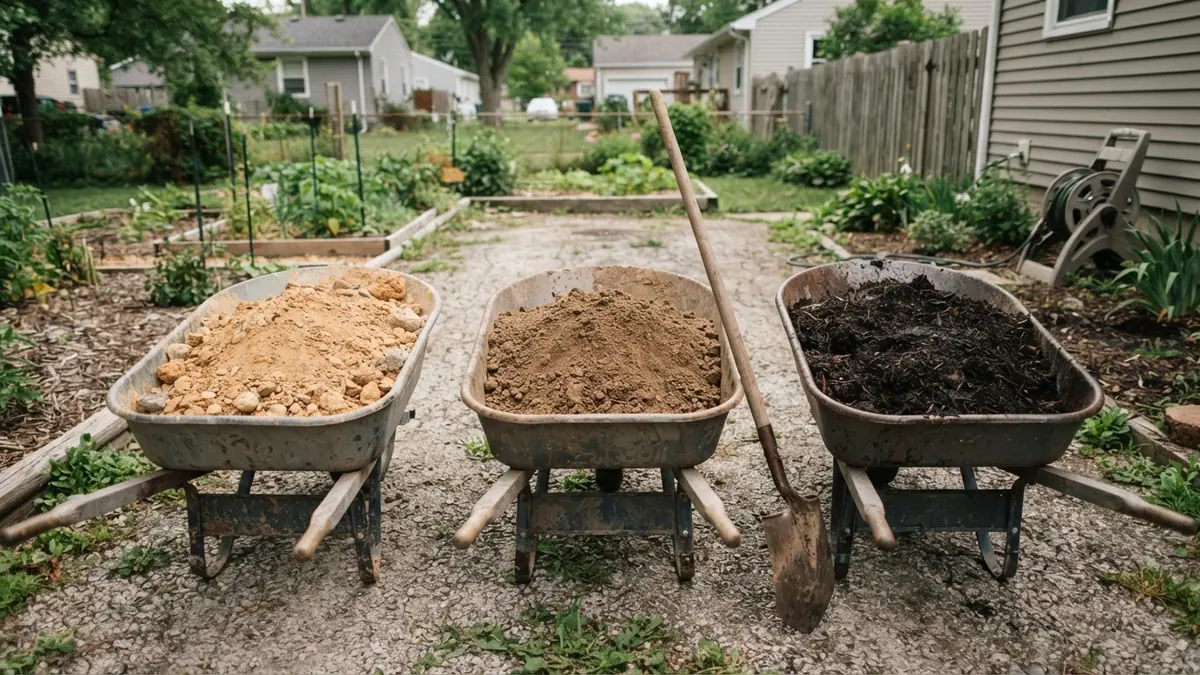
People use these terms interchangeably and end up with the wrong product. Buying fill dirt for a vegetable garden, or paying for premium garden soil when you just need to grade a slope — both are common, expensive mistakes.
Here's the actual difference, and when each one makes sense.
The Short Version
🟤 Topsoil
The upper 2–8 inches of natural ground. Contains some organic matter and minerals. Good for lawn establishment, bed prep, and general grading where plants need to grow.
🪨 Fill Dirt
Subsoil without organic matter. Used for structural fill — raising grade, filling holes, backfilling around foundations. Plants won't thrive in it alone.
🌱 Garden Soil
A manufactured blend — often topsoil + compost + amendments. Best for raised beds and container applications. Too rich (and expensive) for large-scale lawn work.
Topsoil — When to Use It
Topsoil is the most common choice for landscaping projects. It's the layer where grass roots live and where most garden plants spend their lives. The quality varies a lot though — "topsoil" from one supplier might be rich, dark, and screened clean. From another it might be clay-heavy or full of debris.
Ask suppliers whether it's screened (removes rocks, roots, clumps) and what the organic matter percentage is. Anything above 5% organic matter is considered good topsoil. Below 2% and you're essentially buying dirt.
Use topsoil for:
- New lawn installation (seed or sod)
- Filling low spots in an existing lawn
- Building up soil depth in planting beds
- General regrading where plants will grow
Use the topsoil calculator to figure out how many cubic yards you need before you call suppliers. Prices vary enough that knowing your volume lets you comparison shop properly.
Fill Dirt — When to Use It
Fill dirt is cheap because it's basically leftover subsoil from construction projects. It has no nutritional value for plants. It compacts well, which is exactly what you want when you're raising a grade, filling under a patio, or building up a slope.
The mistake people make is putting fill dirt where topsoil should go, then wondering why their grass is thin and yellow. Fill dirt needs at least 4 inches of topsoil on top of it before you can grow anything substantial.
| Project Type | What to Use |
|---|---|
| New lawn from seed | 4–6" topsoil |
| Raise grade near house | Fill dirt (bulk), then topsoil cap |
| Fill a large low area | Fill dirt to within 4–6", then topsoil |
| Vegetable garden beds | Garden soil or topsoil + compost mix |
| Raised planters | Garden soil or potting mix |
| Leveling uneven lawn | Screened topsoil |
Garden Soil — When to Use It
Garden soil (sometimes called "amended topsoil" or "planting mix") is the premium option. It typically contains screened topsoil, compost, sometimes perlite or sand, and sometimes fertilizer. It's designed to drain well, hold moisture, and feed plants through the season.
It's also 3–5× the cost of bulk topsoil. Using it to fill a 5,000 sq ft lawn would cost thousands of dollars more than it needs to. Save it for raised vegetable beds, container gardens, and small high-value planting areas.
Cost Comparison
| Soil Type | Bulk Cost (per cu yd) | Bagged (2 cu ft) |
|---|---|---|
| Fill Dirt | $5–$15 | Not typically sold bagged |
| Basic Topsoil | $12–$30 | $4–$7/bag |
| Screened Topsoil | $25–$55 | $5–$9/bag |
| Premium Garden Soil | $40–$80 | $7–$15/bag |
Mixing Topsoil and Compost
For most lawn and bed projects, the best approach is to use bulk topsoil and blend in 20–30% compost. This gets you better drainage, improved biology, and decent organic matter without the premium price tag of bagged garden soil. Most landscape suppliers sell compost by the yard as well.
A common mix for new lawn beds: 70% screened topsoil + 30% compost, tilled together 4–6 inches deep into the existing soil.
📖 The Clemson Home and Garden Information Center has a solid, research-backed guide on soil amendment that's worth reading before any major planting project.
Once you know what type of soil you need, use the topsoil calculator to get the volume right. And if you're doing a new lawn, check the sod calculator or grass seeding calculator to line up the rest of the materials at the same time.