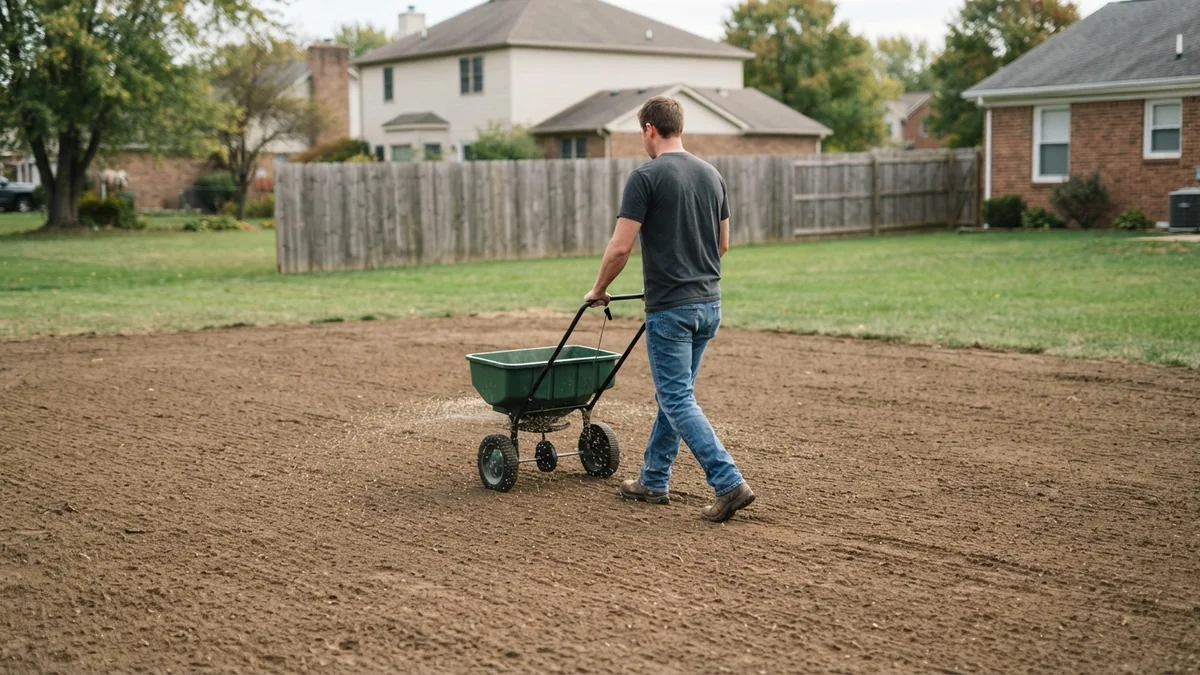
Every grass species has a different seeding rate. Applying too little seed gives you thin, patchy turf with room for weeds. Applying too much wastes money and can cause seedlings to compete against each other, leading to poor establishment. The grass seeding calculator on this site handles the math once you know your grass type and area.
The Formula
Overseeding an existing lawn uses half the new lawn rate — the existing turf fills in a significant percentage, so you don't need to start from scratch density-wise.
Seeding Rates by Grass Type
| Grass Type | New Lawn | Overseeding | Season | Best Region |
|---|---|---|---|---|
| Kentucky Bluegrass | 3 lbs/1,000 sqft | 1.5 lbs | Cool | North |
| Tall Fescue | 7 lbs/1,000 sqft | 3.5 lbs | Cool/Transition | Midwest/East |
| Fine Fescue Mix | 4 lbs/1,000 sqft | 2 lbs | Cool/Shade | North/Shade areas |
| Perennial Ryegrass | 5 lbs/1,000 sqft | 2.5 lbs | Cool | Transition/overseeding warm areas |
| Bermudagrass | 2 lbs/1,000 sqft | 1 lb | Warm | South |
| Zoysia | 1 lb/1,000 sqft | 0.5 lbs | Warm | South/Transition |
| Centipede | 0.5 lbs/1,000 sqft | 0.25 lbs | Warm | Southeast |
When to Seed — Timing Is Everything
❄️ Cool-Season Grasses
- Best: Late August – October
- Soil is warm, air is cooling
- Fewer weed competitors
- Adequate time before winter
- Spring is second-best option
☀️ Warm-Season Grasses
- Best: Late May – July
- Soil temps above 65°F needed
- Full growing season ahead
- Avoid seeding after August
- Dormant seeding not effective
Soil Preparation — Before Any Seed Goes Down
Seed-to-soil contact is the most important factor in germination success. Seed sitting on top of thatch or compacted soil germinates poorly and washes away in rain.
- New lawn: Till 3–4 inches deep, break up clods, remove debris. Add topsoil if less than 4 inches of good soil exists.
- Overseeding: Core aerate before seeding — the plugs break up and seed falls into the holes, dramatically improving contact.
- pH check: Most grasses prefer 6.0–7.0. If you don't know your pH, a $15 soil test kit is worth buying before you spend money on seed and fertilizer.
- Starter fertilizer: Apply before seeding — use the fertilizer calculator to size it correctly.
Common Seeding Failures and Why They Happen
| Problem | Likely Cause |
|---|---|
| Seed didn't germinate | Dry soil, too-cold soil temp, poor seed-to-soil contact |
| Germinates then dies | Dried out during first 2 weeks (irrigation failure) |
| Patchy germination | Uneven spreading, skipped aerating before overseeding |
| Weeds take over instead | Seeded too late, existing weed pressure too high |
| Thin sparse turf | Under-seeded, wrong grass for climate |
After Germination: The Critical 30 Days
New seedlings have essentially no root system for the first few weeks. They're living on the endosperm (stored energy in the seed) and whatever water is at the soil surface. This is the time most people under-water.
Water lightly and frequently: 2–3 times per day for the first 2 weeks, keeping the top ½ inch of soil consistently moist. Once seedlings reach about 1.5 inches, back off to once-daily deep watering. Don't mow until grass reaches mowing height (typically 3–4 inches) and do it with a sharp blade — dull blades tear seedlings out of still-shallow soil.
📖 For region-specific grass selection guidance, the University of Illinois Turfgrass Science program publishes detailed variety performance data for cool-season grasses.
Use the grass seeding calculator to get your exact pound count. Then line up your topsoil for bed prep and your starter fertilizer so everything's ready before you spread the first seed.