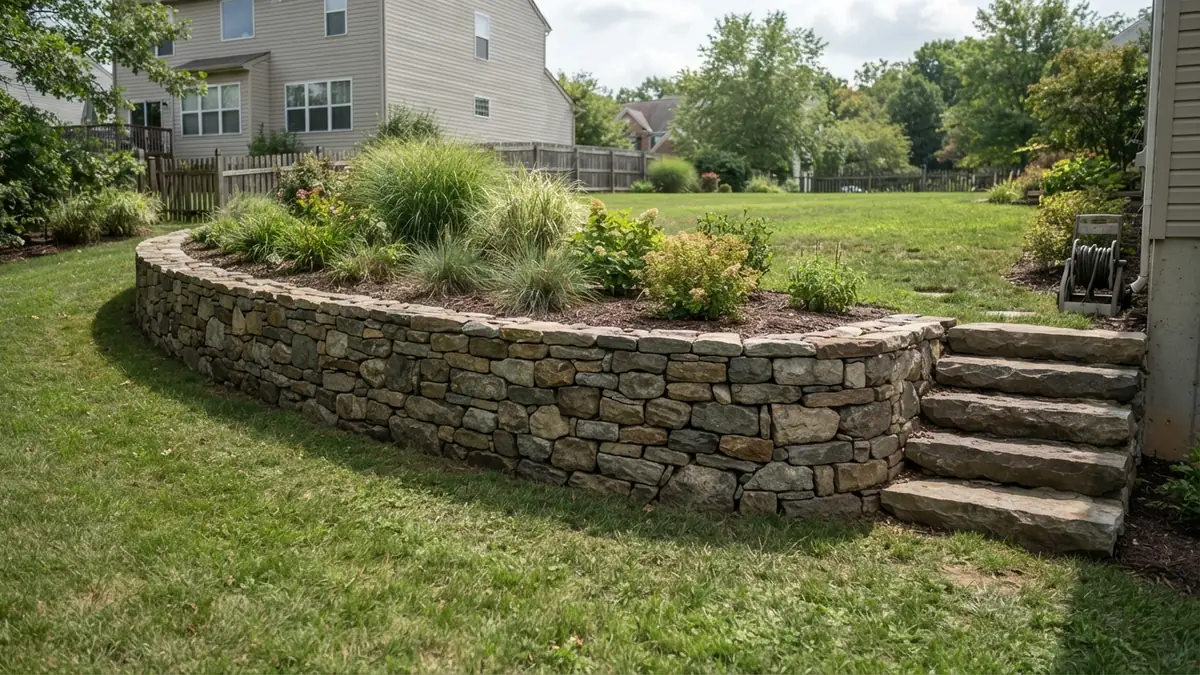
Retaining wall pricing ranges from $10 per square foot for timber to $50+ for natural stone, fully installed. That range exists because material cost, labor intensity, drainage requirements, and wall height all pull in different directions.
Use the retaining wall calculator on this site to get a cost estimate based on your specific dimensions and material choice before calling contractors.
Cost by Material — Installed
| Material | Cost per Sq Ft | Lifespan | DIY Friendly? |
|---|---|---|---|
| Timber / Railroad Tie | $10–$20 | 10–20 years | Yes |
| Interlocking Concrete Block | $15–$28 | 50–75 years | Yes (under 4 ft) |
| Poured Concrete | $20–$35 | 50–100 years | No |
| Natural Stone (dry stack) | $25–$50 | 100+ years | With experience |
| Brick / Mortar | $28–$55 | 50–100 years | No |
| Gabion Wire Baskets | $30–$60 | 50+ years | Yes |
The "installed" number matters here. Material cost alone is misleading — labor for a natural stone wall can be 60–70% of the total project cost because each stone is placed by hand.
What Actually Drives the Price
🔼 Increases Cost
- Wall height over 4 feet (requires engineering)
- Curved or tiered design
- Poor drainage conditions
- Permit requirements
- Near structures (buildings, driveways)
- Difficult site access
🔽 Reduces Cost
- Straight wall, simple shape
- Under 3 feet tall
- Good equipment access
- No permit required
- DIY labor on block walls
The Wall Height Rule You Need to Know
Most municipalities require a building permit for any retaining wall over 4 feet. Some set the line at 3 feet if there's a surcharge load above the wall (a driveway, a structure, or heavy equipment). If you build without a required permit and the wall fails — damages a neighbor's property, floods a yard, injures someone — you're liable.
Walls over 4 feet also typically require a geotechnical or structural engineer to stamp the design. Engineering fees run $500–$2,000 depending on scope. Factor that into your budget if you're over the threshold.
Drainage: The Most Overlooked Part
The most common cause of retaining wall failure is hydrostatic pressure — water saturating the soil behind the wall and pushing it out. Every retaining wall needs:
- Drainage aggregate — 6–12 inches of clean crushed stone directly behind the wall
- Weep holes — openings in the wall face every 6–8 feet to let water through
- Drainage pipe — perforated pipe at the base of the wall leading water away from the structure
- Geotextile fabric — separates soil from aggregate so it doesn't clog over time
Adding proper drainage materials adds $3–$8 per linear foot to the project. Skipping it risks the entire wall within 5–10 years in wet climates.
Real Project Cost Examples
| Wall Type | Dimensions | Estimated Total |
|---|---|---|
| Interlocking block, DIY | 20 ft × 3 ft | $800–$1,800 (materials only) |
| Interlocking block, installed | 20 ft × 3 ft | $1,800–$3,400 |
| Natural stone, installed | 20 ft × 3 ft | $3,000–$6,000 |
| Poured concrete, installed | 20 ft × 4 ft | $3,200–$5,600 |
| Timber, DIY | 20 ft × 3 ft | $600–$1,200 (materials only) |
When to DIY and When to Call a Pro
Interlocking concrete block systems (like Allan Block, Versa-Lok, or similar) are specifically engineered for homeowner installation. Under 3 feet, on stable soil, with proper drainage — this is a legitimate DIY project. A weekend and a rented plate compactor will get you there.
Natural stone, poured concrete, walls over 4 feet, and anything near a structure should be professionally designed and built. The liability isn't worth the labor savings.
📖 For technical guidance on drainage design behind retaining walls, the Federal Highway Administration retaining wall guide is a detailed technical reference.
Get your wall face square footage into the retaining wall calculator to see a cost range for your specific material. Then check gravel calculator to size the drainage aggregate you'll need behind it.