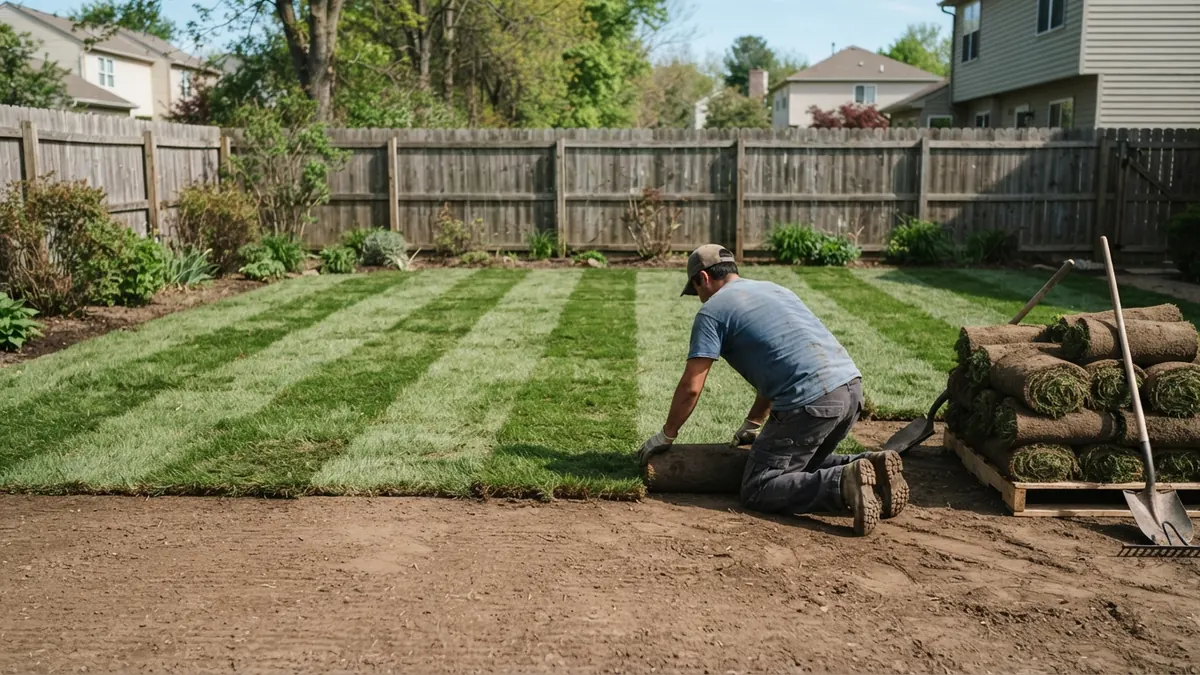
One standard sod pallet covers approximately 450 square feet. That's the number to build from. Take your total square footage, divide by 450, and round up — that's your starting pallet count.
But there's more to it. Shape, waste, access, and grass type all affect what you actually need to order. The sod calculator on this site handles all of it in about 30 seconds. Here's the thinking behind it.
The Basic Pallet Formula
For a simple rectangle, the shape factor is 1. Always round up on pallets — you can't buy half a pallet, and running out mid-install is a real problem since sod from different deliveries can vary slightly in thickness and color.
Shape Factors for Non-Rectangle Lawns
| Lawn Shape | Formula | Shape Factor |
|---|---|---|
| Rectangle / Square | Length × Width | 1.0 |
| Circle | Diameter × Diameter × 0.785 | 0.785 |
| Triangle | Base × Height × 0.5 | 0.5 |
| Irregular | Break into rectangles, add up | Varies |
For irregular shapes, sketch the area, break it into rough rectangles, calculate each one separately, then add them together. It doesn't have to be perfect — that's what the waste factor is for.
Waste Factor: Don't Skip This
Sod gets cut around edges, curves, sprinkler heads, trees, and obstacles. That cut material gets wasted. Use these rough guidelines:
- 5% waste — simple rectangle, no obstacles
- 10% waste — curved edges, a few obstacles (most common)
- 15% waste — complex curves, many trees/beds, tight cuts
10% is the right default for most suburban lawns. You'll need it.
How Much Does Sod Cost per Pallet?
| Grass Type | Per Sq Ft | Per 450 sq ft Pallet | Climate |
|---|---|---|---|
| Bermuda | $0.35–$0.85 | $160–$380 | South / Warm |
| Zoysia | $0.40–$0.90 | $180–$405 | Warm / Transition |
| St. Augustine | $0.35–$0.80 | $160–$360 | Gulf Coast |
| Kentucky Bluegrass | $0.50–$1.00 | $225–$450 | North / Cool |
| Tall Fescue | $0.45–$0.90 | $200–$405 | Transition Zone |
Before You Order: Soil Prep Matters More Than the Sod
This is the part people rush. Sod laid on poor soil will establish slowly, develop shallow roots, and look patchy within a year. The right prep sequence:
- Kill existing vegetation (if replacing a lawn)
- Till existing soil 3–4 inches deep
- Add 4 inches of topsoil if soil quality is poor
- Grade so water drains away from structures (¼ inch slope per foot)
- Apply starter fertilizer
- Lay sod within 24–48 hours of delivery
After Installation: The First 30 Days
Days 1–14
- Water 3× daily (6 AM, noon, 6 PM)
- Keep soil moist 2–3 inches down
- Stay off the sod completely
- Adjust watering for heat
Days 15–30
- Tug test: pull a corner — should resist
- Reduce to once daily deep watering
- First mow when sod reaches 3.5–4"
- Don't remove more than ⅓ of blade height
Sod that gets too dry in the first two weeks browns at the edges and struggles to root. This is the single most common installation failure and it's 100% preventable with consistent watering.
📖 The University of Florida IFAS Extension sod installation guide covers proper installation techniques for southern grasses in detail.
Use the sod calculator to get your exact pallet count, and check the fertilizer calculator to size your starter fertilizer application correctly before you lay the first roll.