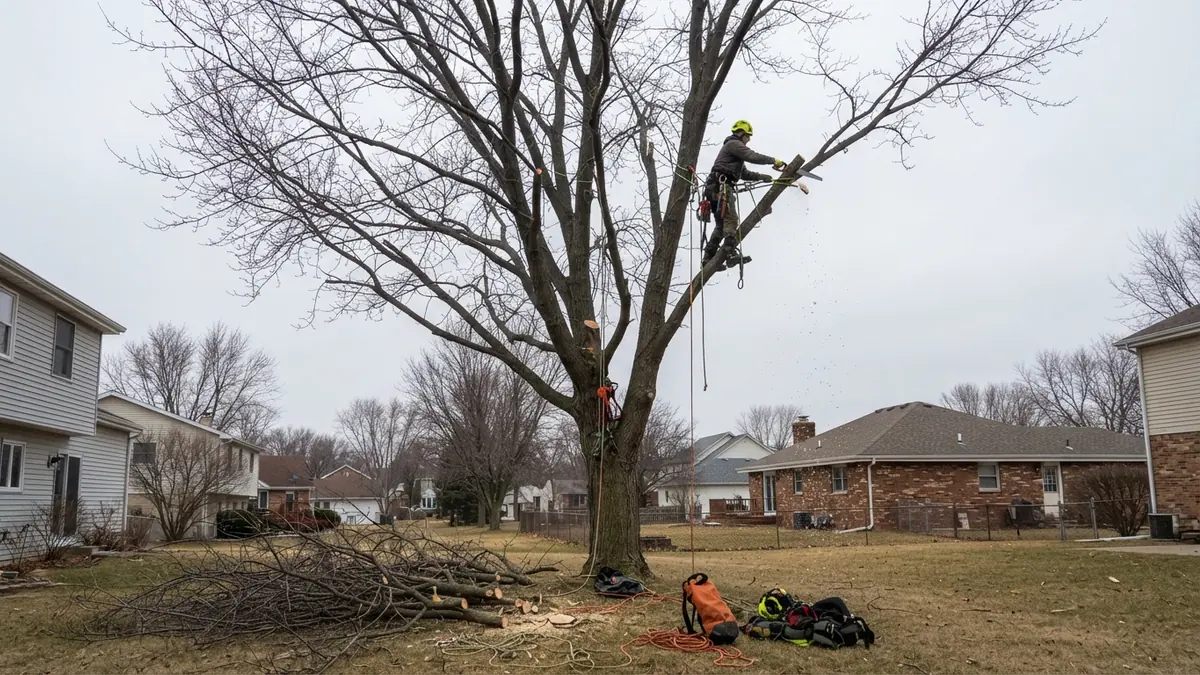
Trimming at the wrong time doesn't always kill a tree. But it can invite disease, reduce flowering, weaken structure, and stress the tree right when it's trying to put energy somewhere useful. The right time depends on the tree species, your goal, and your climate.
Before you call anyone, check the tree trimming cost calculator to understand what you'll likely pay based on tree size and difficulty.
The General Rule
For most deciduous trees: late winter to early spring, before buds break. The tree is dormant, the structure is visible without leaves, wounds close faster when growth resumes, and insect/disease activity is low.
This window varies by region — January–February in the South, February–March in the Midwest and Northeast.
Timing by Tree Type
| Tree Type | Best Trimming Time | Avoid |
|---|---|---|
| Oak | Late winter (Dec–Feb) | April–June (oak wilt risk) |
| Maple | Late winter | Spring (bleeds heavily but isn't harmful) |
| Elm | Late winter | Spring–summer (elm bark beetle/Dutch elm disease) |
| Fruit trees (apple, pear, cherry) | Late winter before bloom | Fall (promotes disease) |
| Spring-flowering trees (dogwood, redbud) | Immediately after bloom | Late summer–fall (removes next year's buds) |
| Evergreen (pine, spruce) | Late winter or new growth in spring | Mid-summer to fall |
| Palm | Spring or early summer | Hurricane season if avoidable |
| Crape myrtle | Late winter | Avoid "crape murder" — light shaping only |
The Oak Exception — Take It Seriously
Oak wilt is a fungal disease that spreads through connected root systems and via sap beetles that are attracted to fresh cuts. In affected regions (most of the South, Midwest, and parts of the East), trimming oaks between April and July significantly elevates risk. Wounds should be painted with latex paint within 15 minutes of cutting during active transmission months.
During dormancy (November–February), the risk drops dramatically. This is the safe window.
Why Trimming in Fall Is Usually Wrong
Fall trimming stimulates new growth that doesn't have time to harden before winter. That soft growth dies back, creating wound sites that invite fungal disease. The one exception is dead, damaged, or dangerous branches — those should come off immediately regardless of season.
What Happens If You Trim at the Wrong Time
🌸 Spring-Bloomers
Trimming dogwood, lilac, magnolia, or redbud in late summer or fall removes the flower buds that formed over summer. You lose the entire spring bloom for that year. Trim them immediately after they finish flowering instead.
🌳 Susceptible Species
Oaks trimmed in spring/summer, elms trimmed in summer, or birch trimmed in spring attract specific pests or pathogens that use fresh wounds as entry points. The timing window isn't advisory — it's protective.
Emergency Trimming: Any Time of Year
Broken limbs, storm damage, limbs over the house, limbs on power lines, and dead branches that pose a hazard — these don't wait for the calendar. Remove them immediately. The risk of leaving a dangerous limb always outweighs the risk of an off-season cut.
Does Trimming Timing Affect Cost?
Yes, somewhat. Demand for tree services is highest in late spring and early summer when trees are actively growing and problems are most visible. Scheduling work in late winter often gets you:
- 10–20% lower prices (arborists' slow season)
- Faster scheduling
- Better visibility for structural assessment (no leaves)
- Optimal healing — cuts close as spring growth begins
It's the best time for the tree and often the best deal for the homeowner.
📖 The International Society of Arboriculture pruning guide covers best practices by species and objective — one of the best free references for homeowners.
Once you know when to trim, use the tree trimming cost calculator to estimate what the work will run. And if the tree is beyond trimming, check the tree removal cost guide for full removal pricing.